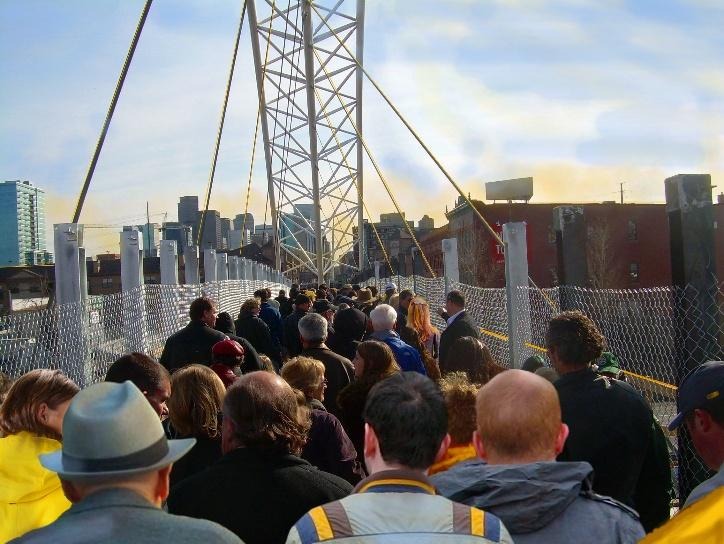
One of Lu Stasko's clients once described the way she works as a giant game of Concentration.
There is a big board in front of her, they said, and when one card turns over, Lu can quickly find the match — sometimes from work she did years before, sometimes from a person she met long ago, sometimes from a recent conversation that suddenly belongs with the opportunity in front of her.
That is how Lu thinks.
She listens for connection.
When Lu meets a business owner, developer, city leader, event producer, or entrepreneur, she is rarely thinking about one tactic alone. She is looking at the larger field around them: who needs to understand their story, who would benefit from knowing about it, what community could help carry it, and what relationship might make the work more meaningful.
Then she brings in the right people, resources, and team support to help turn those connections into a strategy.
Over time, The Stasko Agency has learned that the best ideas often come from outside the industry we are standing in.
A restaurant may understand hospitality better than a developer. A developer may understand place better than a marketer. A city may understand trust better than a brand. An event may understand energy better than a campaign. A nonprofit may understand purpose better than a business. Media may understand timing better than almost anyone.
No industry exists alone. And when we allow one world to teach another, new possibilities begin to appear.
Every project enters an existing community, marketplace, or conversation. A restaurant enters a neighborhood. A development enters a place people already care about. An event enters a calendar already full of choices. A business enters a market where trust has to be earned. A city initiative enters a public conversation already underway.
The mistake is believing the work begins with promotion.
It begins with listening.
Before people can support something, they need to understand it. Before they can advocate for it, they need to feel invited into it. Before they can repeat the story, they need to know why it matters.
That is why community, in the broadest sense of the word, is not a soft idea. It is strategy.
Community may mean residents, merchants, customers, civic leaders, industry partners, tourism organizations, business groups, donors, sponsors, or media. It may be local, regional, or national. The principle is the same: people support what they understand, and they promote what they feel connected to.
This is where cross-promotion becomes powerful. One audience can introduce another. One relationship can open the next door. One event can give media something to cover. One media story can help a partner see the opportunity. One civic connection can build credibility. One business relationship can turn into a new market.
Publicity, partnerships, events, community engagement, civic relationships, and business development are often treated as separate efforts.
Lu sees them as connected.
And with the right team around the work, those connections can become campaigns, events, introductions, media moments, partnerships, and strategies that create real movement.
Some of Lu's earliest and most meaningful work came from helping merchants, residents, developers, and business owners see themselves as part of a shared place. A real estate development could support nearby businesses. Local merchants could help tell the story of what was being built. Residents could become ambassadors when they felt included early. Media could help people outside the immediate circle understand why something mattered.
The lesson was simple, and it still guides the work:
People support what they understand.
They promote what they feel part of.
They trust what has taken the time to include them.
That lesson applies far beyond one neighborhood or one city. It applies to a developer entering a new market, an economic development team trying to tell a stronger story, an event trying to attract visitors, a company expanding into a new region, or a business that wants to become more than another name in the marketplace.
The real opportunity is often not found in one lane. It is found in the connection between lanes.
A developer may need a hospitality mindset. A restaurant may need an economic development strategy. A city may need a stronger story. An event may need a tourism partner. A business may need a community invitation. A media opportunity may need a more meaningful reason to matter.
That is the work The Stasko Agency helps create: finding the story, the relationships, and the combinations that help something become more visible, more trusted, and more possible.
Sometimes the answer is not more marketing.
Sometimes it is a better relationship. A better invitation. A better story. A better way to connect what already exists.